When Branch opened its San Francisco retail store, the team wasn’t just focused on in-store transactions. They wanted to understand whether physical retail could drive incremental online demand, and how much of that impact would be lost if measured solely through point-of-sale data.
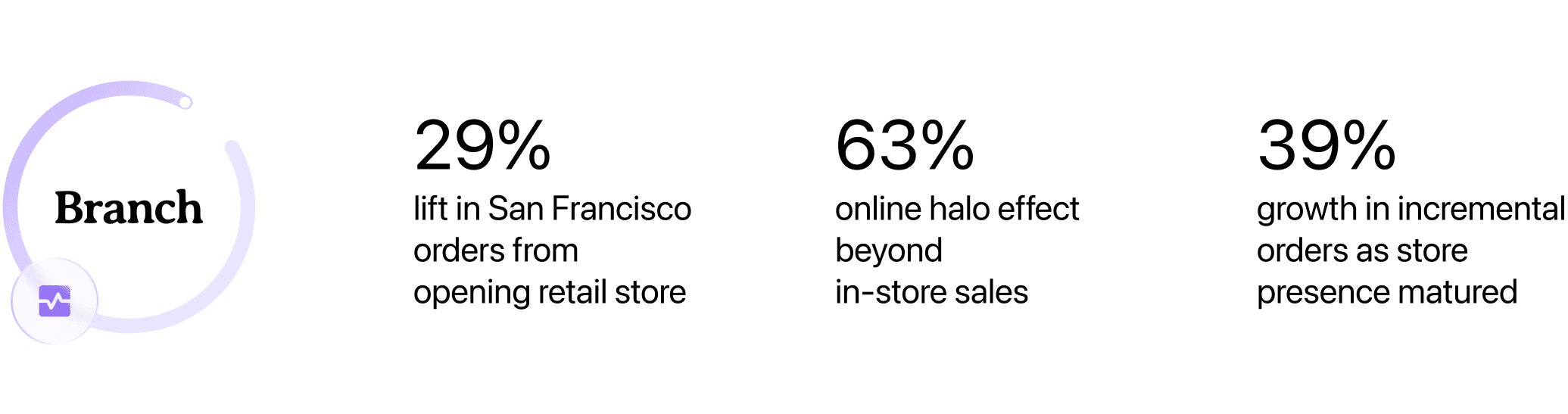
Most people think about halo effects from online to offline. With our SF store, we wanted to understand whether the reverse was true. Using WorkMagic, we were able to measure that impact and saw the store driving meaningful sales growth beyond what was captured by in-store transactions alone.

About Branch
Branch Furniture creates thoughtfully designed office furniture and work accessories that enhance productivity and comfort in modern workspaces. Initially launched as an online direct-to-consumer brand, Branch expanded its omnichannel presence with the opening of its first physical retail store in San Francisco, allowing customers to experience their products in person.

Store POS data couldn’t fully measure retail’s true impact
For Branch, retail performance couldn’t be measured by in-store transactions alone. As a brand selling large, bulky office furniture, many customers don’t complete their purchase inside the store. Rather, the store operates as an important physical touchpoint along the customer's buying journey. As Sib explains:
“ As a company that sells larger products, our customers don't always come into the store and take the product home with them. So we knew we had to find a way to measure the impact of retail outside of those four walls."
— Sib Mahapatra, Co-founder and Chief Product Officer, Branch
Customers might visit the store to see and test products, then complete their purchase online days later.
Relying solely on POS data meant a significant portion of retail’s influence would go unmeasured, risking under-investment in a channel that was driving incremental demand.
Measuring retail like a performance channel
Branch partnered with WorkMagic to measure the incremental impact of its San Francisco retail store using a geo-based lift test powered by the Synthetic Control Method.
San Francisco was treated as the exposed market, while a weighted set of comparable regions was used to model a counterfactual baseline — estimating what order volume would have looked like without the store.
The analysis measured total orders (online + offline), capturing both in-store purchases and downstream online demand. WorkMagic first ran the test shortly after launch, then re-ran the same methodology six months later to evaluate how impact evolved as the store matured. Placebo testing across control regions confirmed that the observed lift reflected true incremental demand rather than noise.
Physical retail was amplifying demand beyond the four walls of Branch's SF store
Initial results: measuring the retail halo at launch
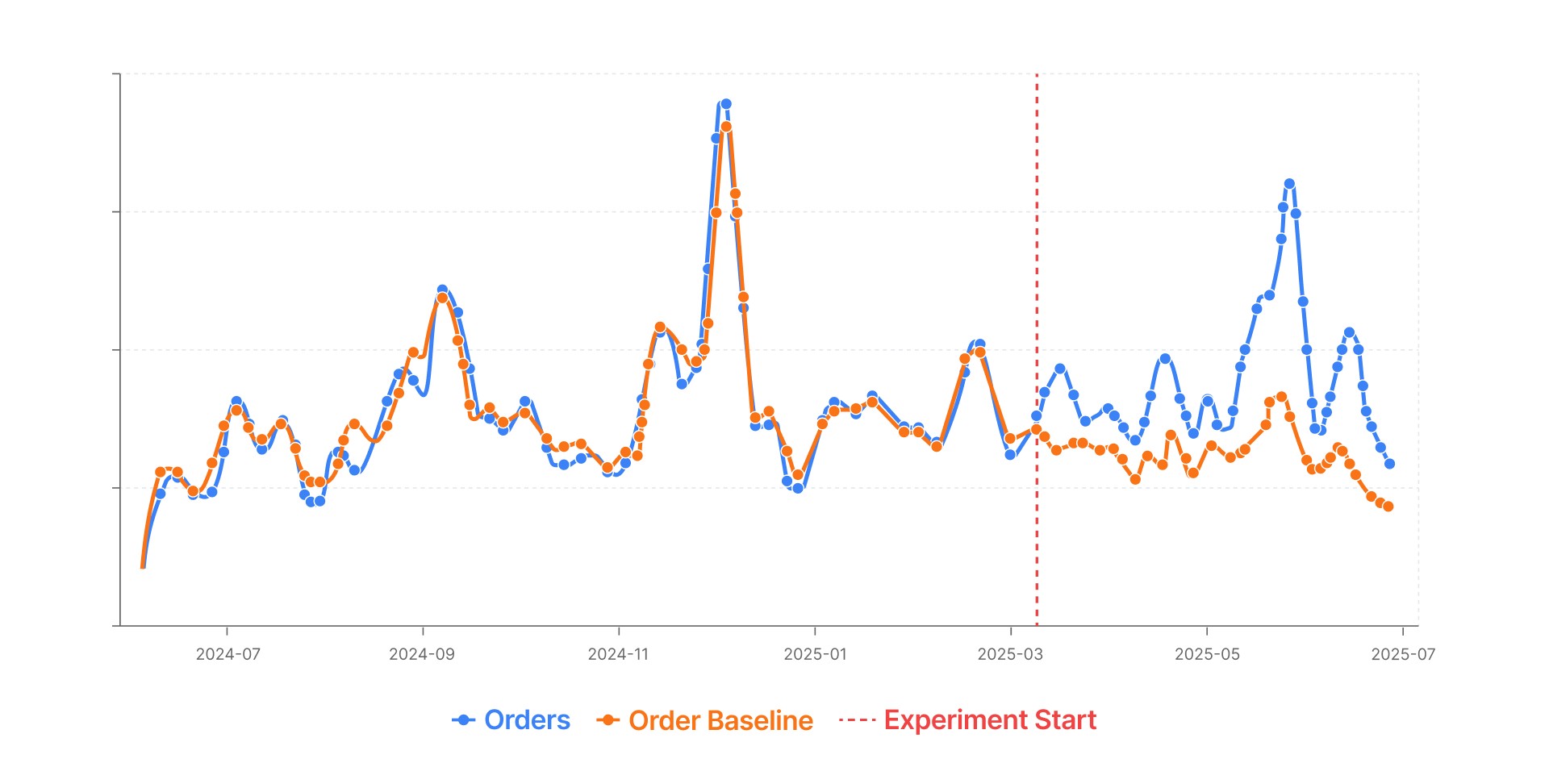
Shortly after the San Francisco store opened, Branch ran its first lift test to understand the immediate impact of physical retail. The June analysis showed a ~28% lift in total San Francisco orders confirming that the store was driving meaningful incremental demand overall.
From there, WorkMagic decomposed that lift to understand where the impact was occurring. While some of the incremental orders were captured through in-store POS transactions, a significant share was not.
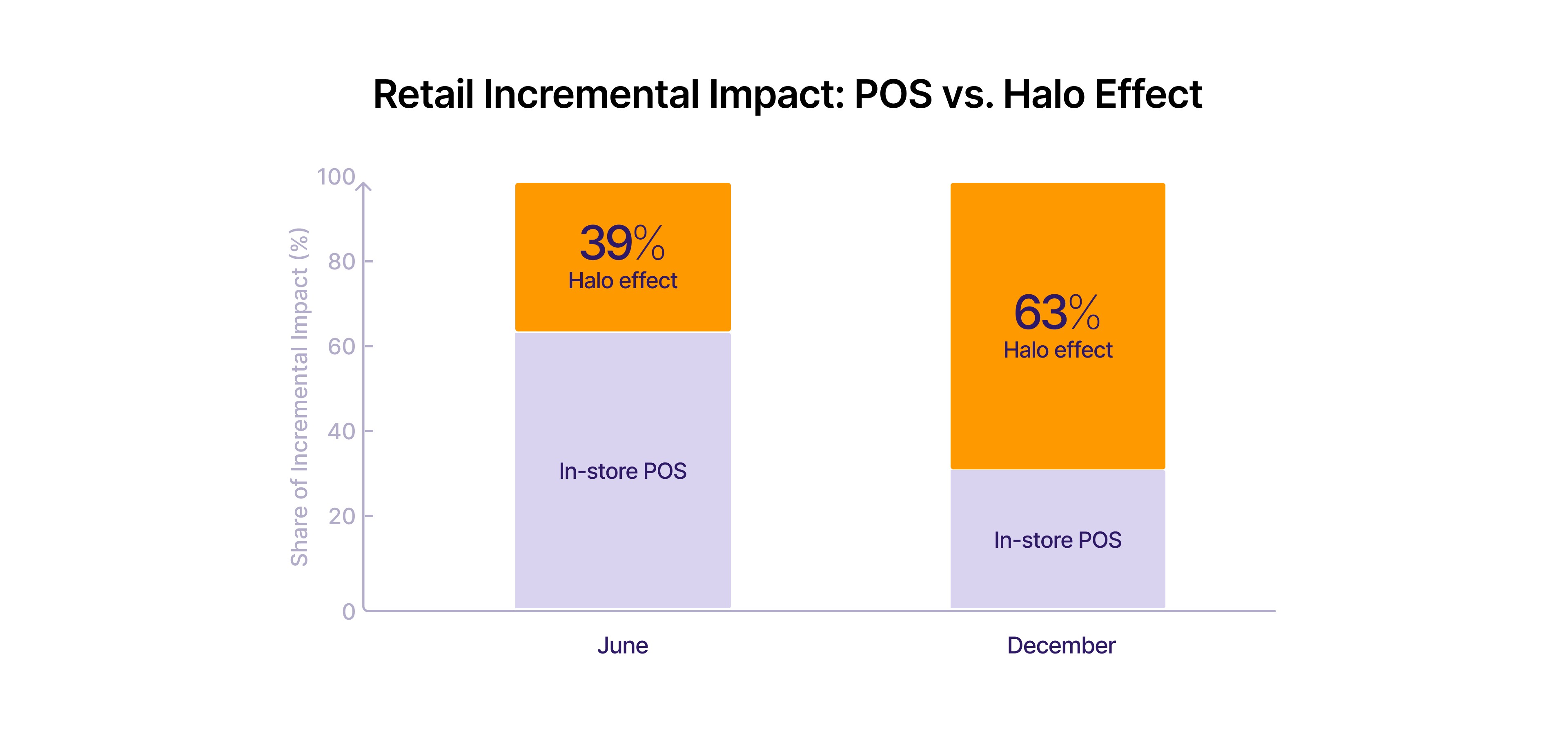
Roughly 39% of the incremental lift occurred outside of POS tracking, revealing a clear offline-to-online halo effect. These were online orders influenced by the physical store that would have been invisible under POS-only measurement.
Six months later: consistent lift, stronger halo
Six months after opening, Branch re-ran the same analysis to understand how the store’s impact had changed as it matured.
The December lift test showed a ~29% lift in total San Francisco orders, indicating that the store’s overall incremental contribution remained strong and consistent as its presence in the location matured. At the same time, the number of daily incremental orders attributed to the San Francisco store had also increased by 39%.
What changed was where that lift showed up. In December, approximately 63% of the incremental impact occurred outside in-store POS transactions, signaling a much stronger halo effect than at launch.
Had Branch relied on point-of-sale data alone, they might have understated the store’s impact, missing a significant share of incremental online orders driven by physical retail. Instead of cannibalizing e-commerce, the store amplified demand with a growing portion of value occurring outside in-store transactions.
As the store matured, this halo effect strengthened over time showing that retail impact wasn’t a short-term launch spike but a compounding driver of online growth.
Want to measure the true incremental impact of your channels — online and offline? Book a demo with WorkMagic.